VIP Karaoke Norwich
Adapting a Norwich karaoke venue through customer observation, supplier coordination and a clearer booking journey.
Starting with how people use the venue
My work at VIP Karaoke has connected service decisions, room improvements, procurement and digital booking. I paid attention to the questions people asked before booking and how they used the rooms once inside. Those observations helped me identify changes to pricing, song search and layout that could make the venue easier to understand and enjoy.
Making a first visit easier
The existing package combined a long room booking with a bottle of spirits and mixers. For some visitors, that meant committing to more time and spending than they wanted. I proposed charging by person and hour and helped adapt the drinks offer. The aim was to make the choice clearer for a group deciding how long to stay.
Song search and room layout
A song system built around initial-letter searches did not fit customers who expected to type complete English words and spaces. I researched alternatives, traced the supplier behind a system used by another venue and tested it before it was adopted in three rooms. I also remeasured table sizes to keep space for drinks while allowing more room to stand, sing and move.
Coordinating suppliers across countries
Based in the UK, I compared suppliers in China and coordinated lighting, panels, furniture, equipment and transport with the team carrying out the building work. A furniture sizing problem and a tight supply of panels taught me to check measurements at each handover and allow for installation waste. Procurement decisions have consequences long after a quotation is accepted.
Turning reservations into a digital workflow
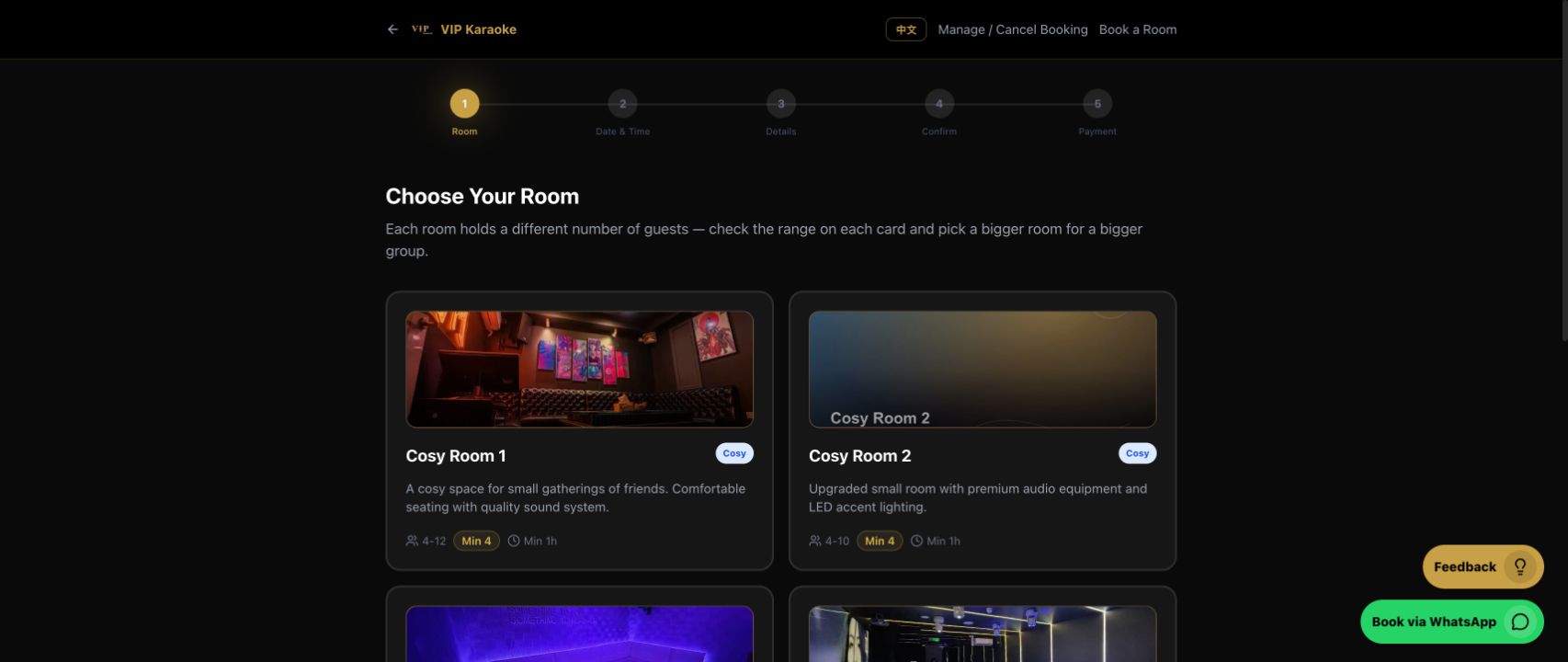
Telephone calls and handwritten records were the starting point for the booking work. I defined requirements for room selection, time slots, payment and room allocation, then reviewed the customer journey against the venue’s operating needs. AI supported the software implementation. The public booking website is in use; wider management features remain separate development work.
What I take from the experience
I now approach a service change through three connected questions: what does the customer need to understand, what must the team be able to deliver, and what information has to pass between them? At VIP, the answers have involved a pricing unit, a search field, a table measurement and a booking rule. Small decisions deserve attention because they shape the whole visit.